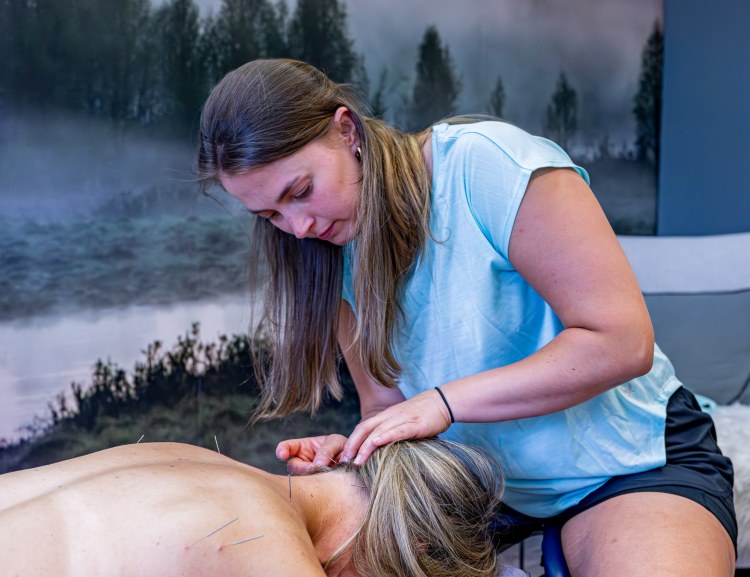
Dry needling (DN) is a treatment based on Western medicine that uses acupuncture needles. Only healthcare professionals can study and provide DN treatment, and it is covered by patient insurance.
Want to read this page in Finnish?
Customer feedback:
”As someone who engages in physical labor and works out regularly, my recovery has significantly improved. My muscle strength has increased with regular attendance. It’s not painful at all, I can assure you!”
Dry needling originated in the 1940s, so it is not a very new technique. It has been researched and used for a long time and is globally recognized as one of the pain management methods.
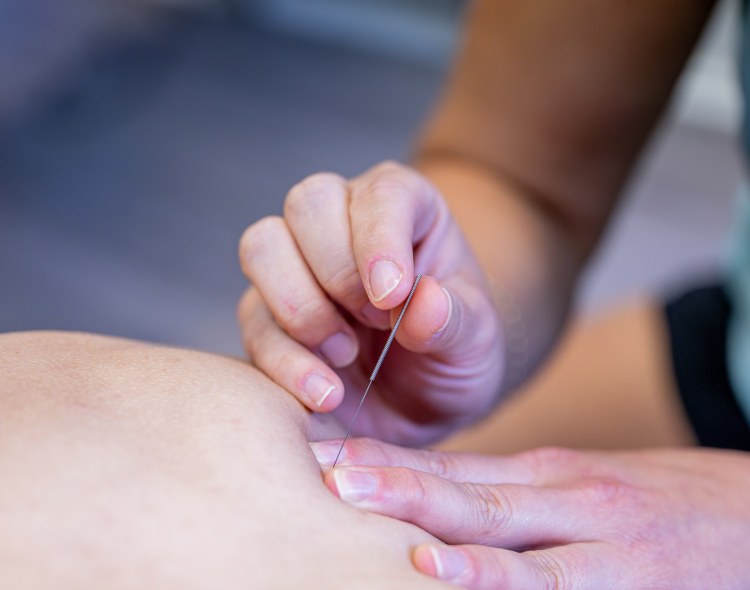
Dry needling treatment involves addressing trigger points (TrP) located in the soft tissues (myofascia). Up to 85% of individuals with chronic pain also experience myofascial pain syndrome. Superficial needling is used to treat, for example, symptoms in joint areas and areas of referred pain. DN therapy locally stimulates the immune system and triggers the body’s own healing processes. This treatment differs from traditional Chinese acupuncture in that acupuncture targets acupoints located on meridians, or energy channels, according to traditional Chinese medicine.
DN therapy can be used to treat a variety of musculoskeletal issues; it is utilized for pain management and muscle tension.
The treatment can be safely performed on almost all areas of the body. DN treatment is not painful. The recipient may feel a quick, momentary sensation of pressure and a muscle twitch when the needle is inserted into the trigger point. The common side effect of the treatment is transient soreness in the needled area and the referred area, which can last up to 3-4 days, and in addition, a local bruise may develop at the needling site. After the treatment, anti-inflammatory medications should not be taken, as they can inhibit the body’s healing process.
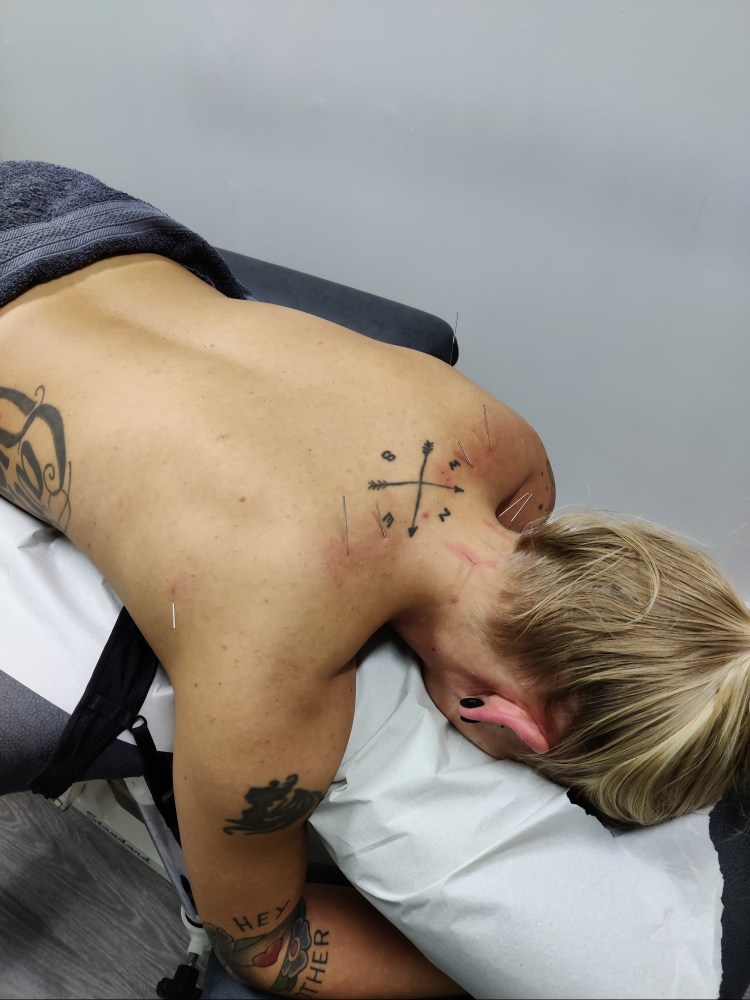
Trigger points (TrP) are sensitive or painful spots in the muscle that feel tight as bands or pea-like points in superficial muscles. Tight bands are muscle fibers that are constantly in a shortened state. This shortened state prevents the muscle from functioning in its characteristic way, weakening its local metabolism. Treatment of the points improves tissue oxygenation, enhances blood circulation, and reduces inflammation and local muscle tension. DN therapy is particularly effective, especially in athletes.
Reviews
Very good massage and very well executed use of strength in the massage. Dry needling was also an interesting experience.
— Jukka
The masseur knew what she was doing and helped with the ailments.
— Jenni
The treatment of pain in the S-nivelen area with acupuncture, initially became severely painful but improved after the night. Additional treatments are necessary to completely eliminate the issue.
— Matti
Professional and friendly service
— Hanna
Dry needling treatment is used to address the following issues:
- neck and shoulder pain
- back pain
- headache/migraine
- shoulder pain
- hip pain
- dustbin
- chronic pain
- tennis elbow
- plantar fasciitis
- sequelae of sports injuries
Dry needling – contraindications:
- fever
- swelling
- infection
- acute injury
- impaired lymphatic circulation in the affected limb
- medication that increases the risk of bleeding
- spasticity
- metal or silicone allergy
- the treatment is unsuitable for other reasons in relation to the situation
Patients with epilepsy and diabetes are treated on a case-by-case basis.
If you have cancer, talk to your doctor about treatment options before starting therapy.
 Ruuth Wellness